
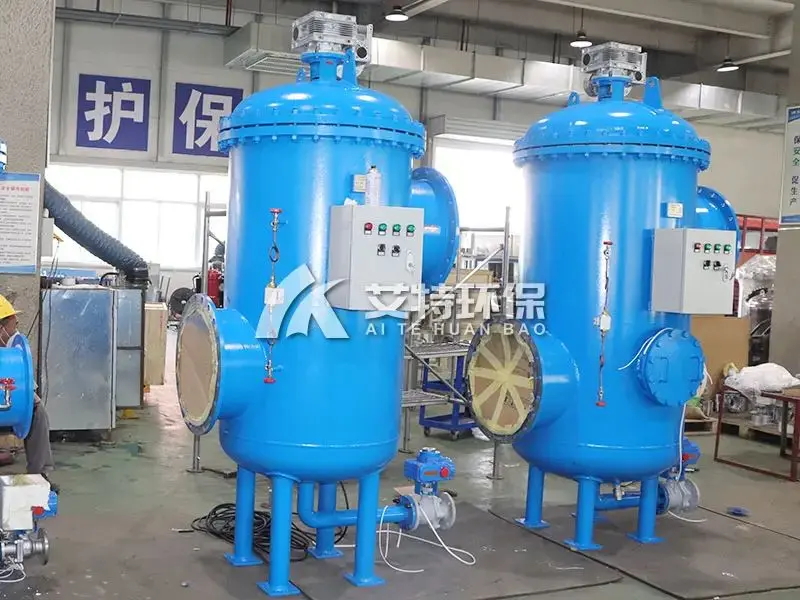
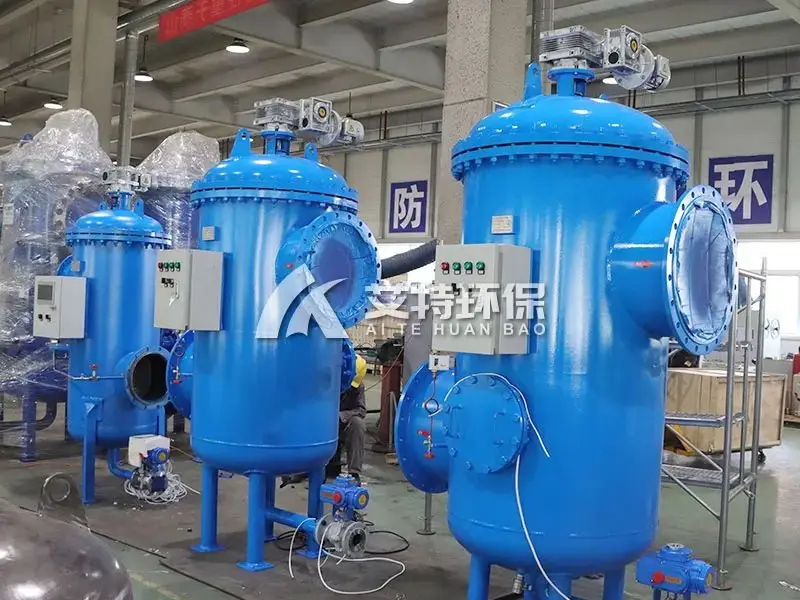
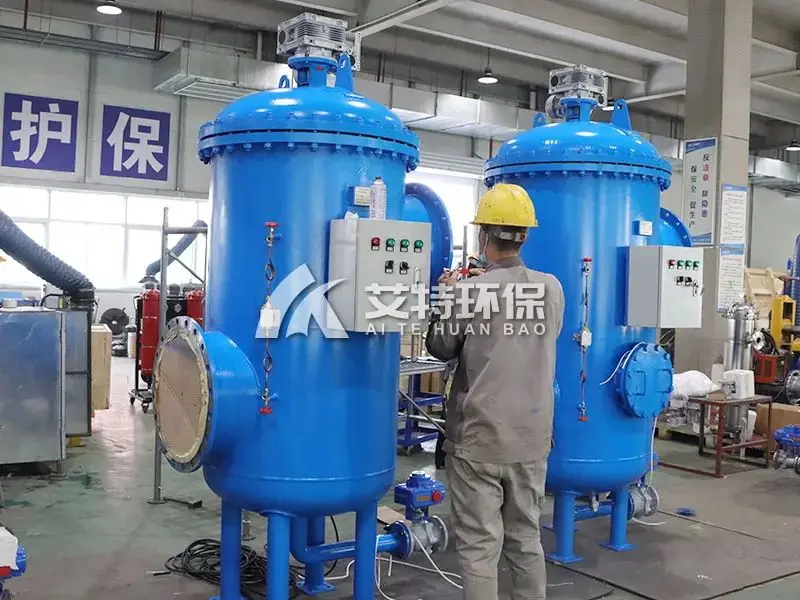
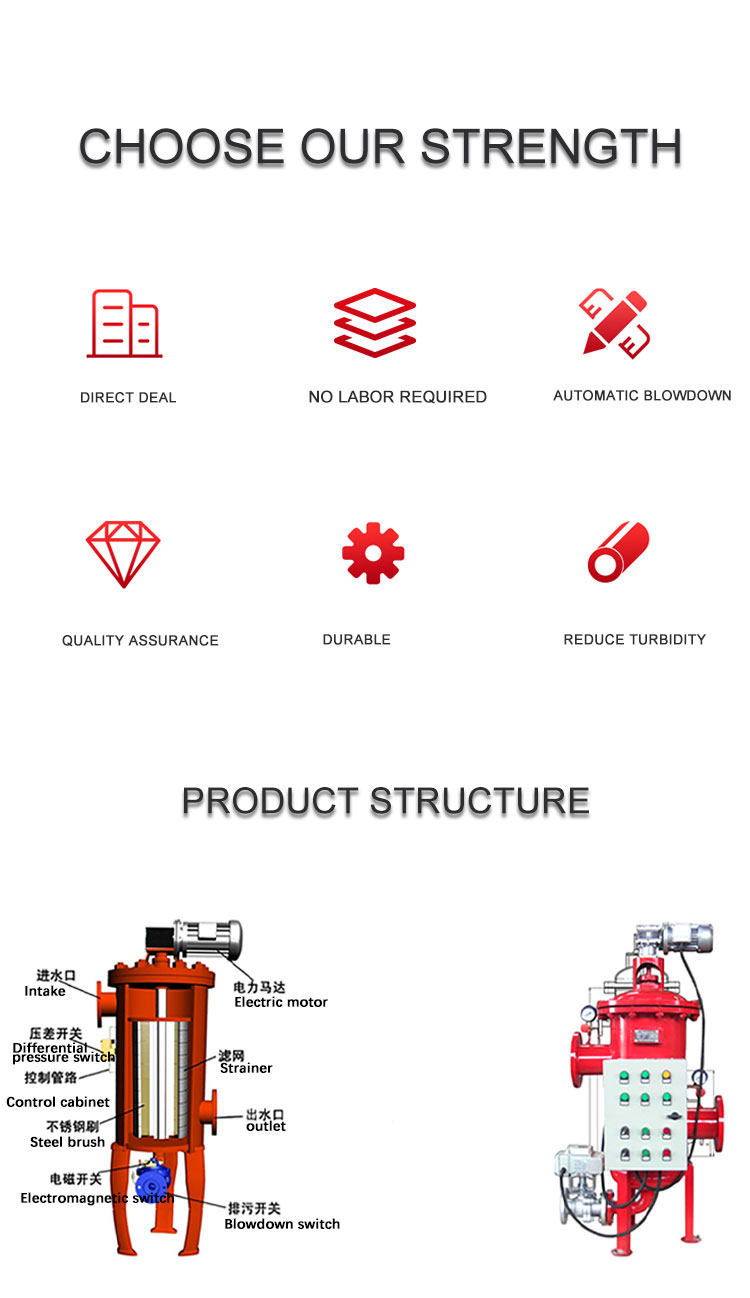
Scraper-type self-cleaning filter is a kind of filter that directly intercepts impurities in water, removes suspended solids and particulate matter in water body, reduces turbidity, purifies water quality, reduces system fouling, algae, rust, etc., to purify water quality and protect other systems.
Product Description
The scraper-type self-cleaning filter directly intercepts impurities in water,
removes suspended solids and particulate matter, reduces turbidity, purifies water quality,
and minimizes system fouling, algae, and rust to protect downstream equipment.
Under normal operation, water enters the filter body through the inlet.
With intelligent (PLC/PAC) control, the system automatically detects impurity
accumulation and signals the blowdown valve to initiate automatic sewage discharge.
Working Principle
Water enters from the inlet, first passing through a coarse screen to remove larger particles,
then flowing to the fine filter. As filtration proceeds, impurities accumulate on the inner surface of the fine filter,
forming a contaminant layer that creates a pressure differential between the inner and outer sides.
When this differential reaches the preset value, the automatic cleaning cycle activates—without
interrupting clean water supply. The cleaning valve opens, significantly reducing pressure in the cleaning
chamber and suction assembly. This pressure differential generates strong suction through the suction nozzles,
drawing contaminants out. Simultaneously, the electric motor drives the suction pipe in
a helical (axial plus rotational) motion, thoroughly cleaning the entire inner surface of the filter screen.
The entire flushing cycle completes in just tens of seconds, after which the drain valve closes and the
filter resumes normal operation, ready for the next cleaning cycle.
Application Scope
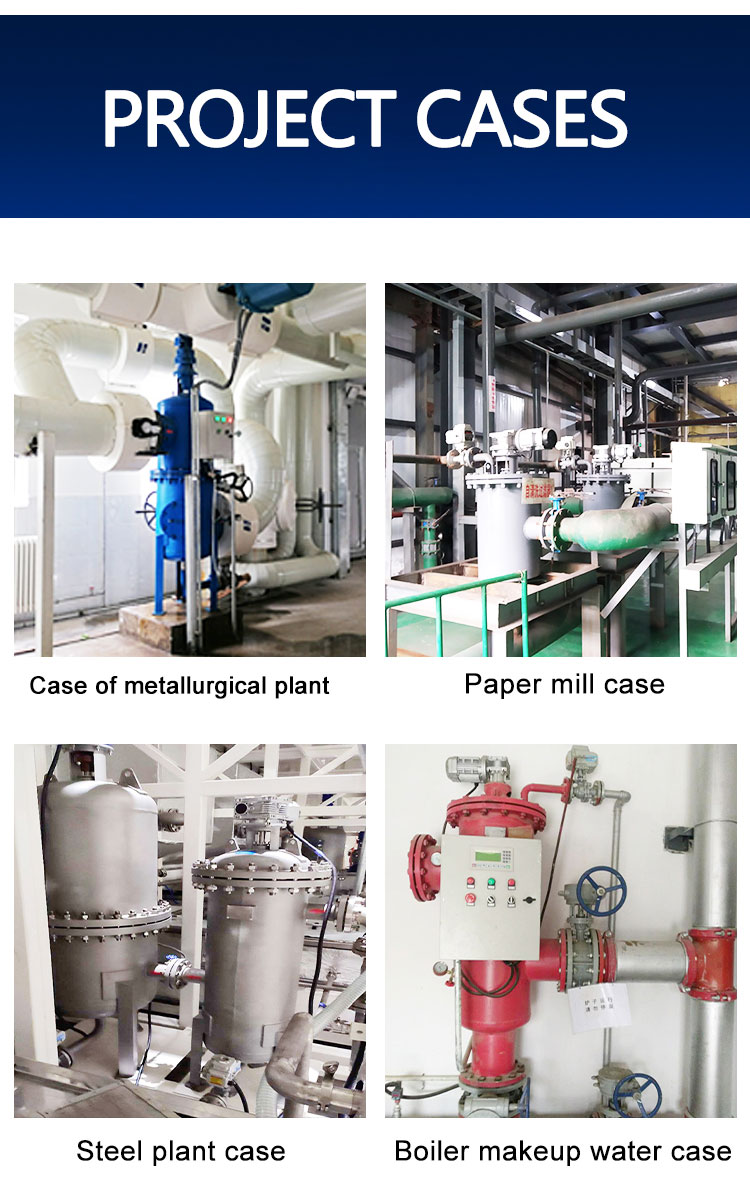
1. Iron & Steel Industry – Water treatment and filtration for raw material yards, sintering and pelletizing plants,
as well as cooling water filtration for blast furnaces, rolling mills, continuous casting machines, and related systems.
2. Automotive Industry – Coating production lines for automobiles, tractors, motorcycles, and engine manufacturing
water treatment systems.
3. Power Plants – Precision pretreatment for high-purity boiler water preparation, along with filtration of generator
cooling water and sealing water.
FAQ
Q1: What is the minimum filtration accuracy of this scraper-type self-cleaning filter?
The fine filter can achieve filtration accuracy ranging from 50 to 3000 micrometres, depending on the screen mesh selected.
Custom accuracy is available upon request for specific application requirements.
Q2: Does the cleaning process interrupt the normal water supply?
No. The automatic cleaning cycle operates without interrupting the clean water supply.
The system continues to deliver filtered water while the suction assembly removes accumulated
contaminants from the filter screen.
Q3: How is the cleaning cycle triggered?
The cleaning cycle is triggered automatically when the pressure differential between the inner
and outer sides of the fine filter reaches a preset value. Manual start is also available via the PLC/PAC control
panel for scheduled maintenance or inspection purposes.
Q4: How long does each cleaning cycle take?
The entire flushing process takes only tens of seconds (typically 10–60 seconds, depending on model
and contaminant load). After completion, the drain valve closes and the filter returns to normal filtration mode.
Q5: What is the maintenance frequency for this filter?
The self-cleaning mechanism significantly reduces manual maintenance. Routine checks should be
performed periodically to inspect seals, drive motor, and control system. The coarse and fine screens
typically require inspection every 6–12 months, depending on water quality and operating conditions.
Q6: Can this filter handle high-suspended-solids water sources?
Yes. The two-stage design (coarse screen plus fine screen) effectively handles high contaminant loads.
For extremely high-solids applications, we recommend installing a pre-sedimentation tank or a coarse
strainer upstream to reduce the cleaning frequency and extend screen life.
Q7: What materials are used for the filter screen and housing?
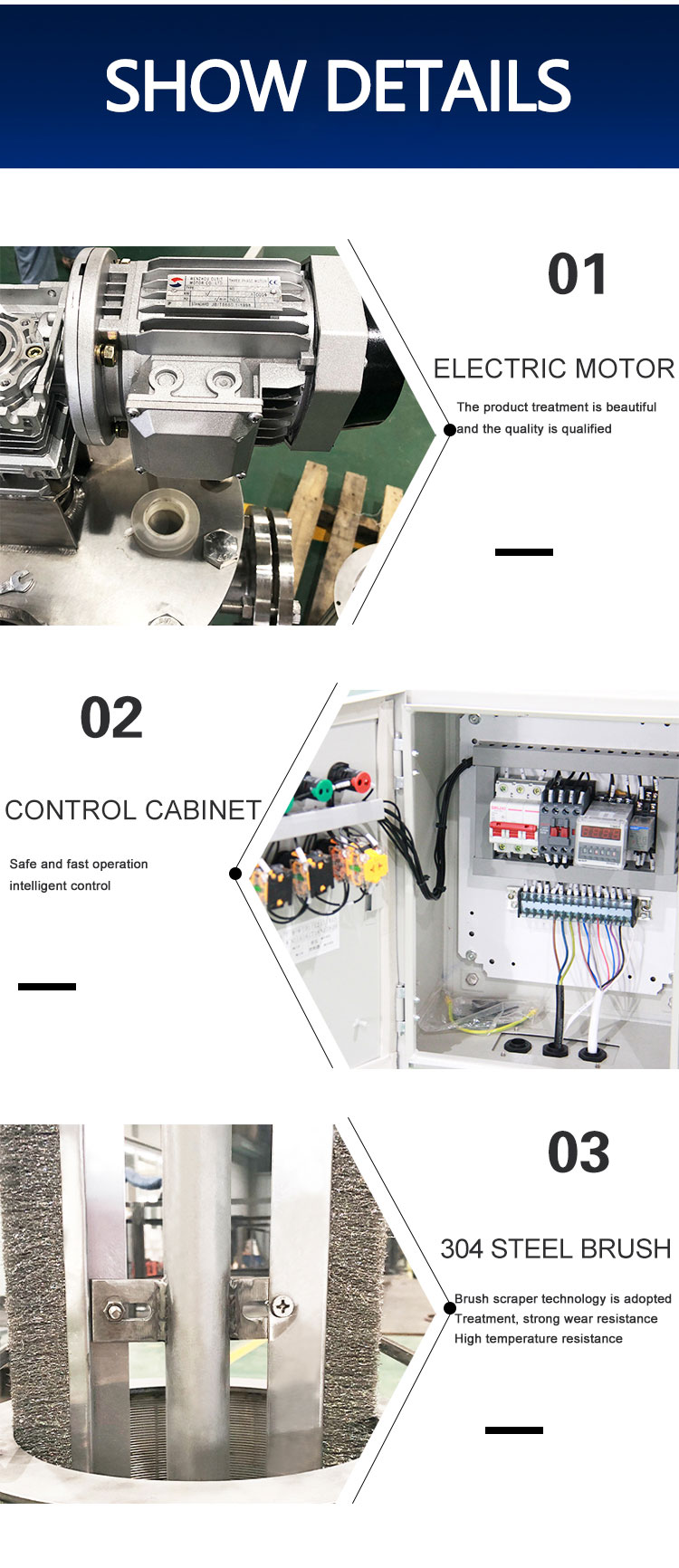
Standard construction uses stainless steel for the filter screens and carbon steel for the housing,
with anti-corrosion coating. Full stainless steel construction is available for corrosive or marine environments upon request.
Q8: What power supply is required for the control system?
The standard control system operates on 380V/50Hz (three-phase) or 220V/50Hz (single-phase),
depending on model. Custom voltage options are available for different regional standards.
Q9: Is this filter suitable for seawater or high-salinity applications?
For seawater or high-salinity environments, we recommend the full stainless steel construction
option with appropriate seals to resist corrosion. Please consult us for material selection guidance.
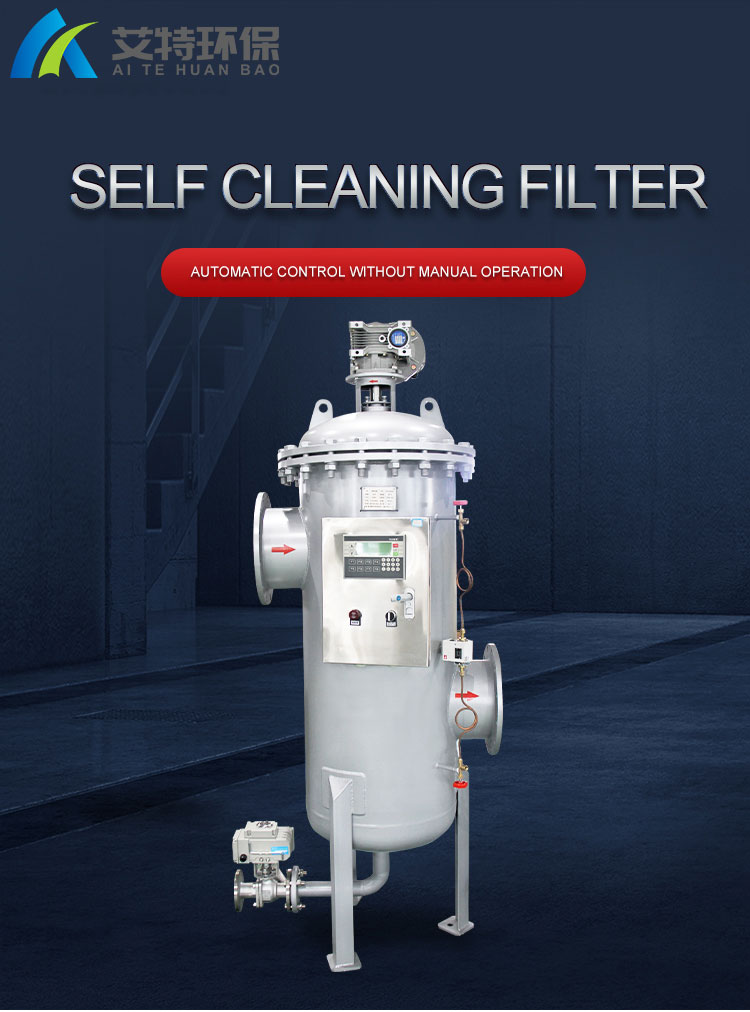
Scraper self-cleaning filter
Similar ProductsVIEW MORE >


WhatsApp / Wechat: +8613273719759
Factory Address: Zhengshang Navigation Square, South Hanghai Road, Erqi District, Zhengzhou City, Henan Province P.R.China.


 Export01@aiteeps.com
 ++8613273719759
