
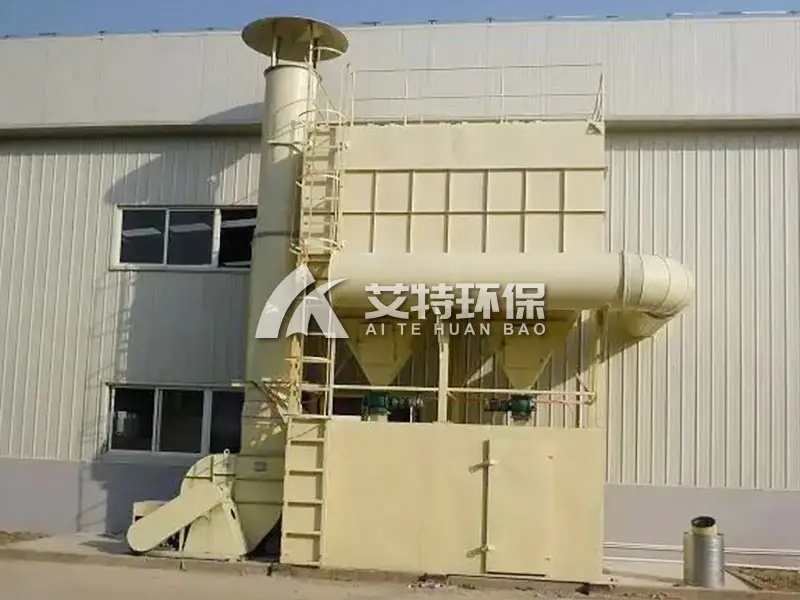
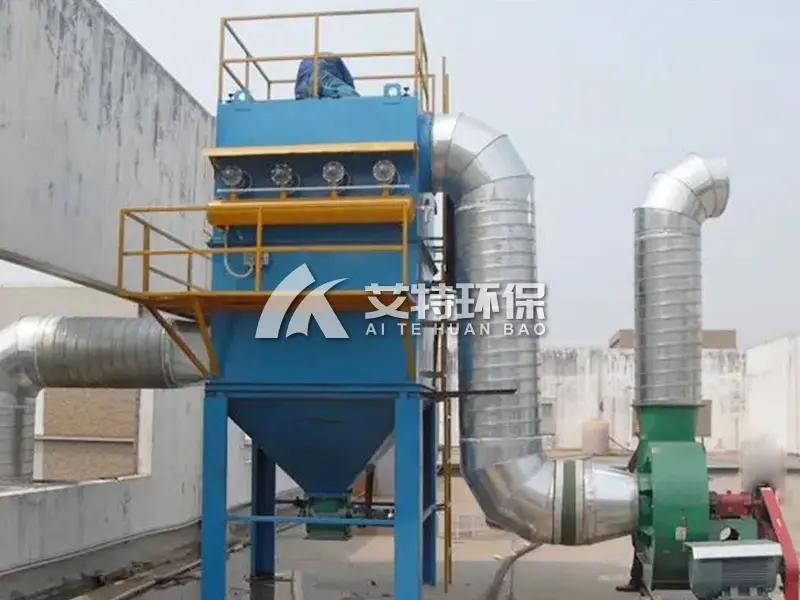
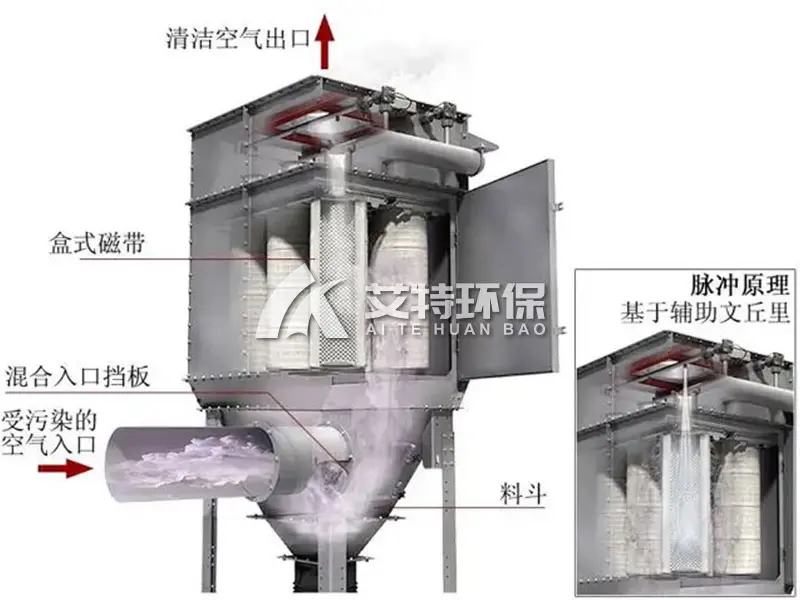
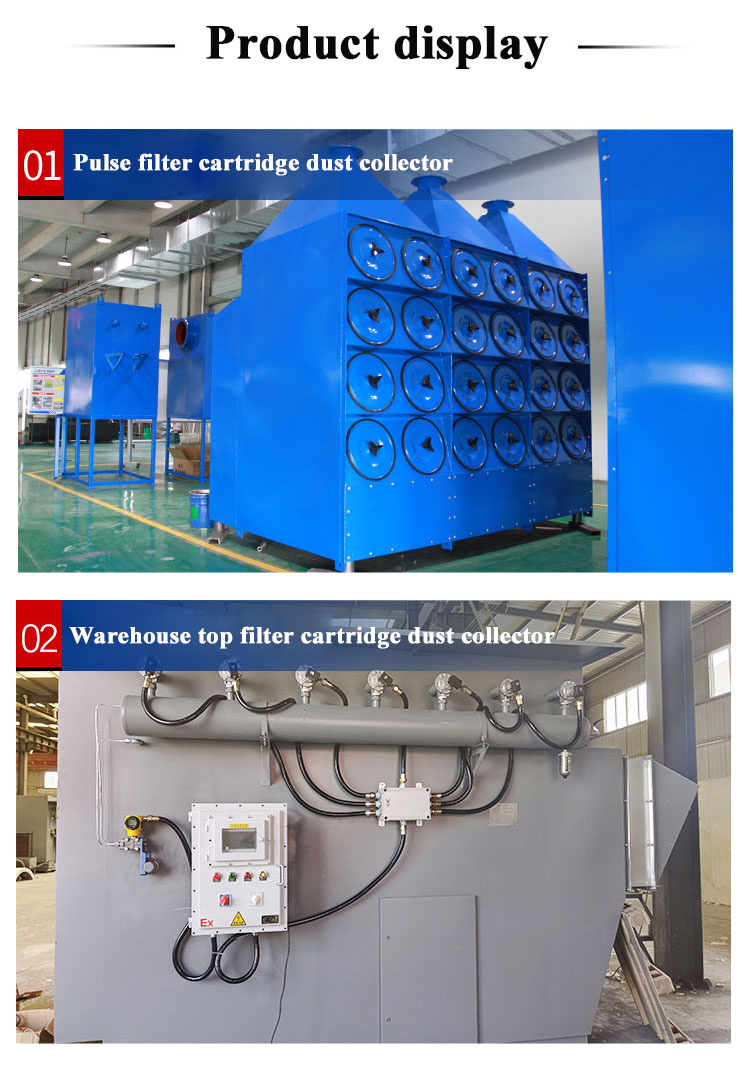
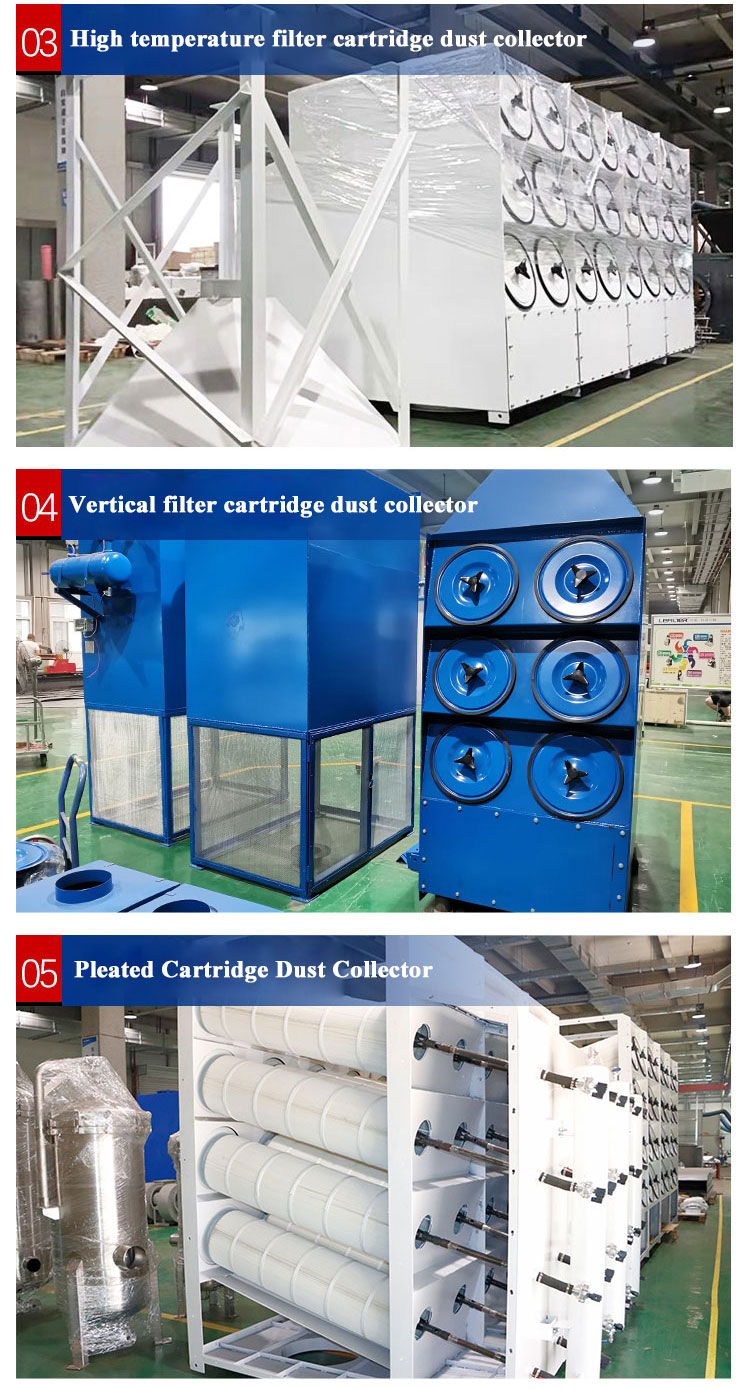
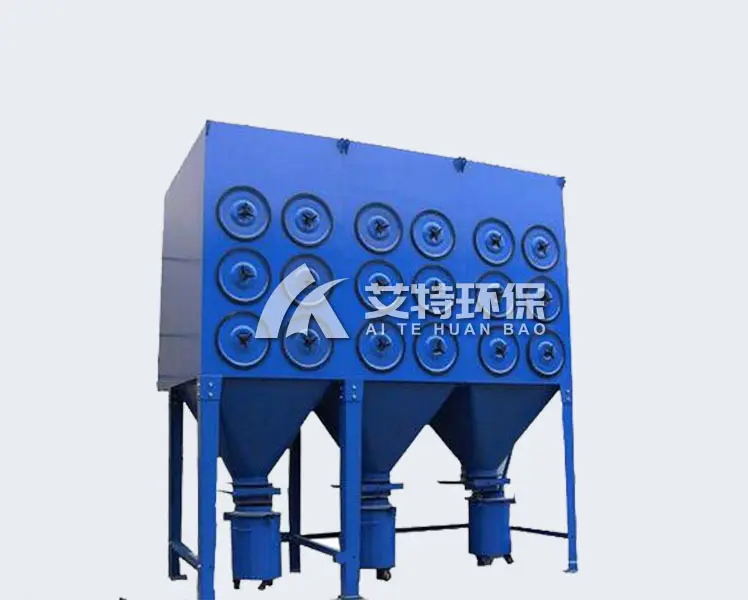
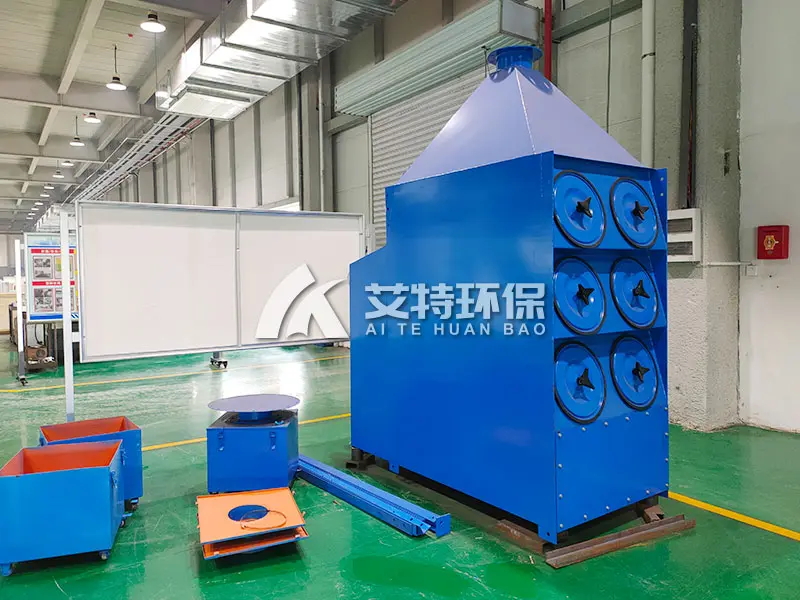
The structure of the vertical filter cartridge dust collector is that the dust removal filter element is installed vertically. When the dust removal filter cartridge is installed vertically, its installation form can be divided into two installation methods: top-loading and bottom-loading.
The Vertical Filter Cartridge Dust Collector features vertically installed filter cartridges,
which can be configured in either top-loading or bottom-loading designs depending on
site conditions and maintenance preferences. This flexible arrangement ensures easy element
replacement and adaptability to various workspace constraints.
Structural Composition
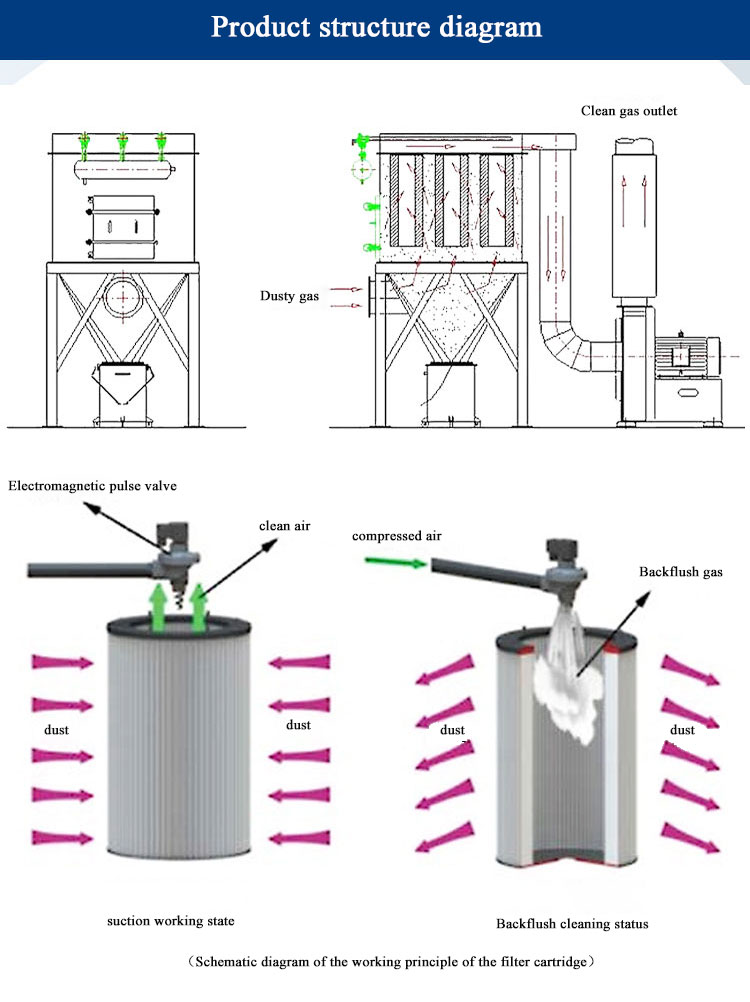
The system primarily consists of a housing, pulse valves, inlet air duct, exhaust air duct,
and a dust collection hopper. Dust-laden air enters the housing through the inlet, passes through
the filter cartridges where particulate matter is captured and falls into the hopper, while clean air
is discharged via the exhaust duct. An integrated pulse-jet cleaning system performs online,
automatic back-flushing to maintain optimal filter permeability over extended operation.
The overall structure is simple, compact, and well-organized, delivering high-efficiency dust removal
while minimizing floor space requirements.
Performance Features
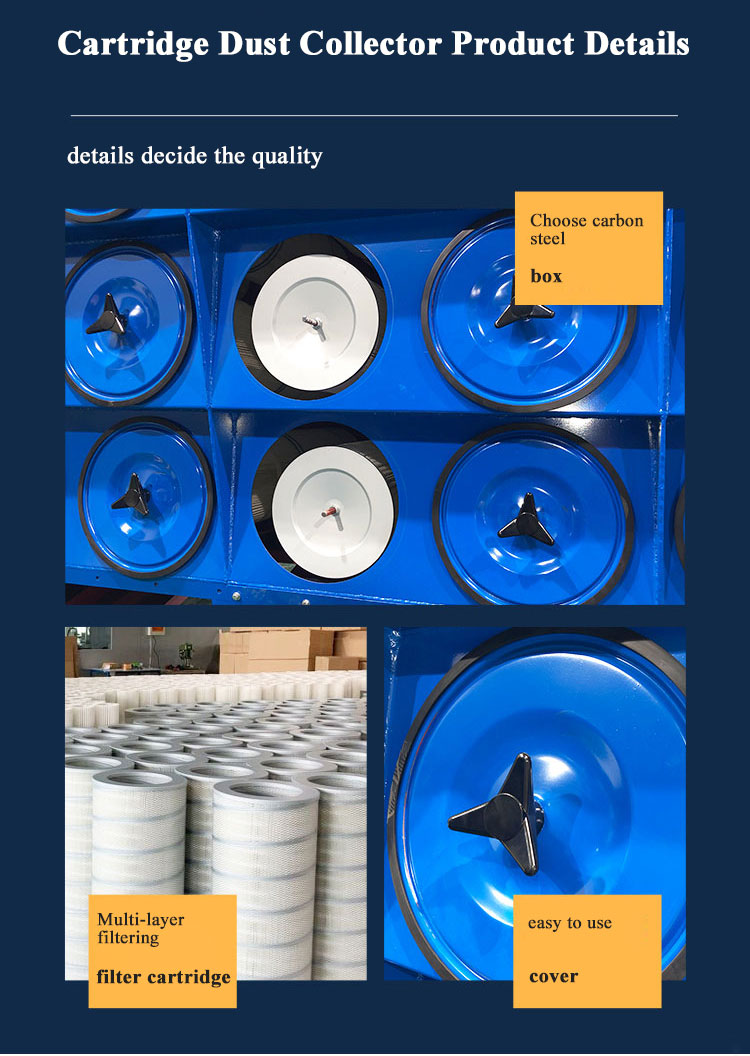
1. High filtration area in a small footprint – The pleated filter media significantly increases the filtration
area per unit volume, allowing for a compact design with reduced overall dimensions.
2. Low filtration velocity & stable resistance – With a larger effective filtration area under the same volume,
the airflow velocity through the media is lower, resulting in lower and more stable pressure drop across the system.
3. Easy maintenance & low workload – The relatively short cartridge height simplifies installation and replacement,
reducing downtime and labor costs.
4. High-strength filter media – The pleated material offers excellent mechanical toughness and durability,
ensuring reliable performance under varying operating conditions.
5. Critical sealing requirement – The pleated filter media requires tight sealing at both end caps.
Any leakage will significantly compromise filtration efficiency, so proper installation and seal integrity are essential.
Frequently Asked Questions (FAQ)
Q1: What is the difference between top-loading and bottom-loading installation?
A: Top-loading cartridges are accessed and replaced from the clean-air side (top of the unit),
which is ideal for applications where the hopper area has limited access. Bottom-loading cartridges are
installed from the dirty-air side (bottom), often preferred when overhead clearance is restricted.
Your choice depends on site layout and maintenance convenience.
Q2: How does the pulse-jet cleaning system work?
A: Compressed air is released in short, high-pressure bursts through pulse valves, directed into the cartridge interior.
The sudden reverse airflow expands the pleated media, dislodging accumulated dust layers from the outer surface,
which then fall into the hopper. This cleaning cycle can be time- or differential-pressure-controlled.
Q3: What is the recommended replacement interval for filter cartridges?
A: Replacement frequency depends on dust load, particle characteristics, and operating hours.
We recommend monitoring the pressure differential across the filter – when it reaches the preset
alarm value (typically 1.5–2.0 kPa), cleaning or replacement is needed. Regular visual inspection of
the cartridge surface is also advised.
Q4: What filter media materials are available?
A: We offer various media options including polyester, cellulose, PTFE-coated, and flame-retardant materials,
selected based on dust properties (e.g., moisture content, temperature, oil content, or combustible risk).
Please consult our technical team for material recommendations.
Q5: Can this unit handle high-temperature or humid gas streams?
A: Standard models are designed for temperatures up to 80°C. For higher temperatures (up to 120°C or more),
special high-temperature media and seals are available. For humid or sticky dust applications,
we recommend PTFE-coated or anti-hydrolysis treatments to prevent media clogging.
Q6: What happens if the end cap seals are not tight?
A: Poor sealing allows unfiltered dust to bypass the media and enter the clean-air discharge,
drastically reducing collection efficiency and potentially damaging downstream equipment.
Always ensure proper gasket installation and torque during cartridge replacement.
Q7: How should spare cartridges be stored?
A: Store in a dry, cool, and dust-free environment, away from direct sunlight and moisture.
Keep cartridges in their original packaging until use and avoid stacking heavy objects on them to prevent pleat deformation.
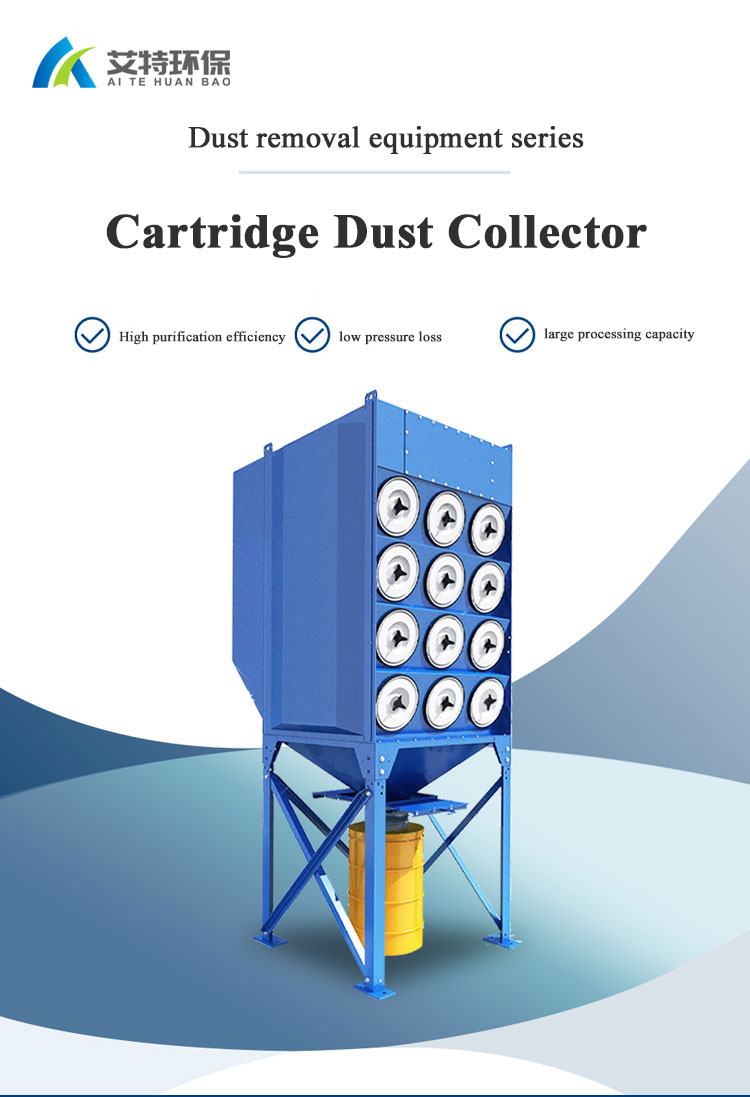
Vertical filter cartridge dust collector
Similar ProductsVIEW MORE >
WhatsApp / Wechat: +8613273719759
Factory Address: Zhengshang Navigation Square, South Hanghai Road, Erqi District, Zhengzhou City, Henan Province P.R.China.


 Export01@aiteeps.com
 ++8613273719759
