
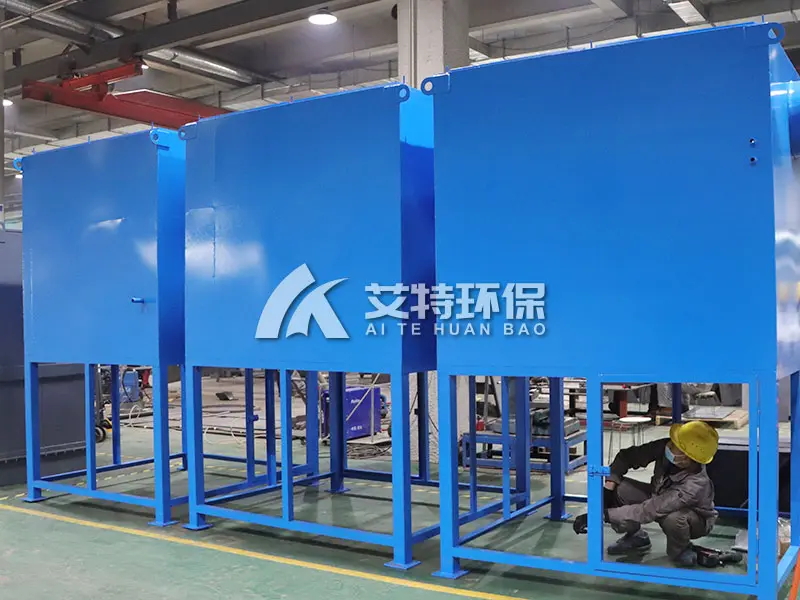
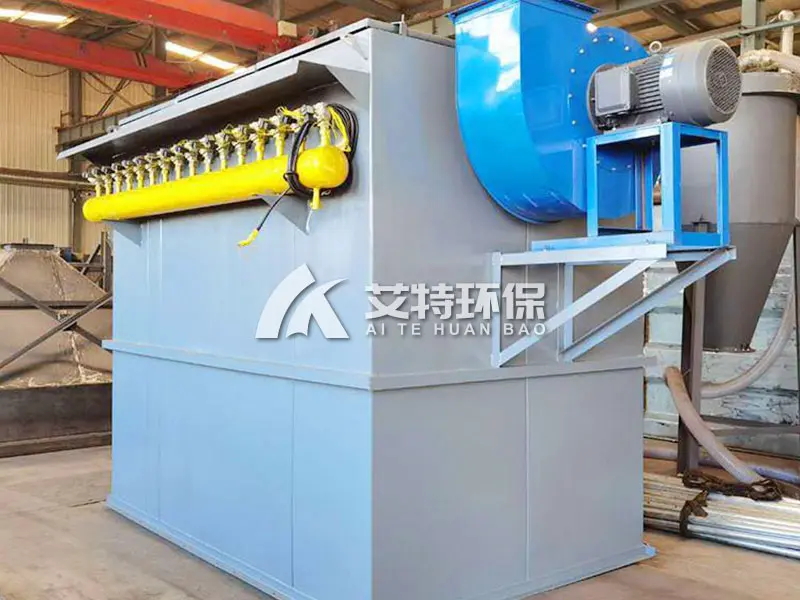
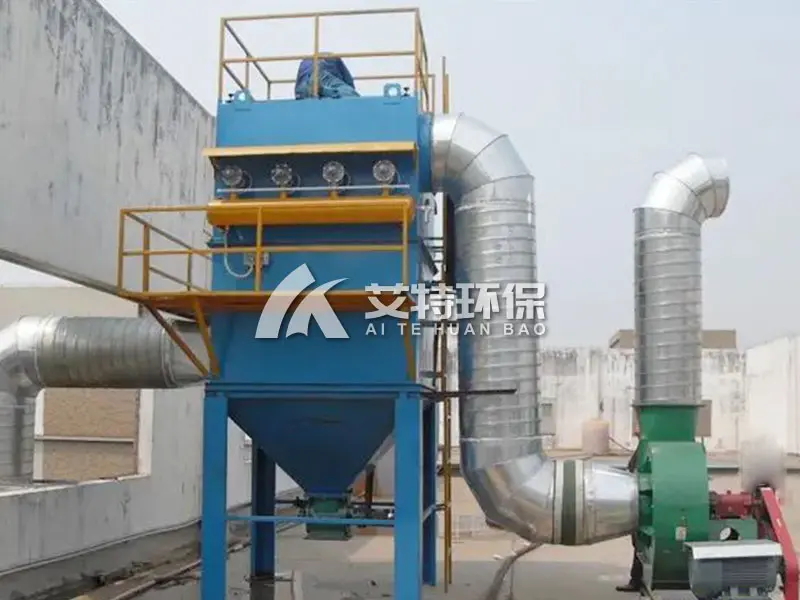
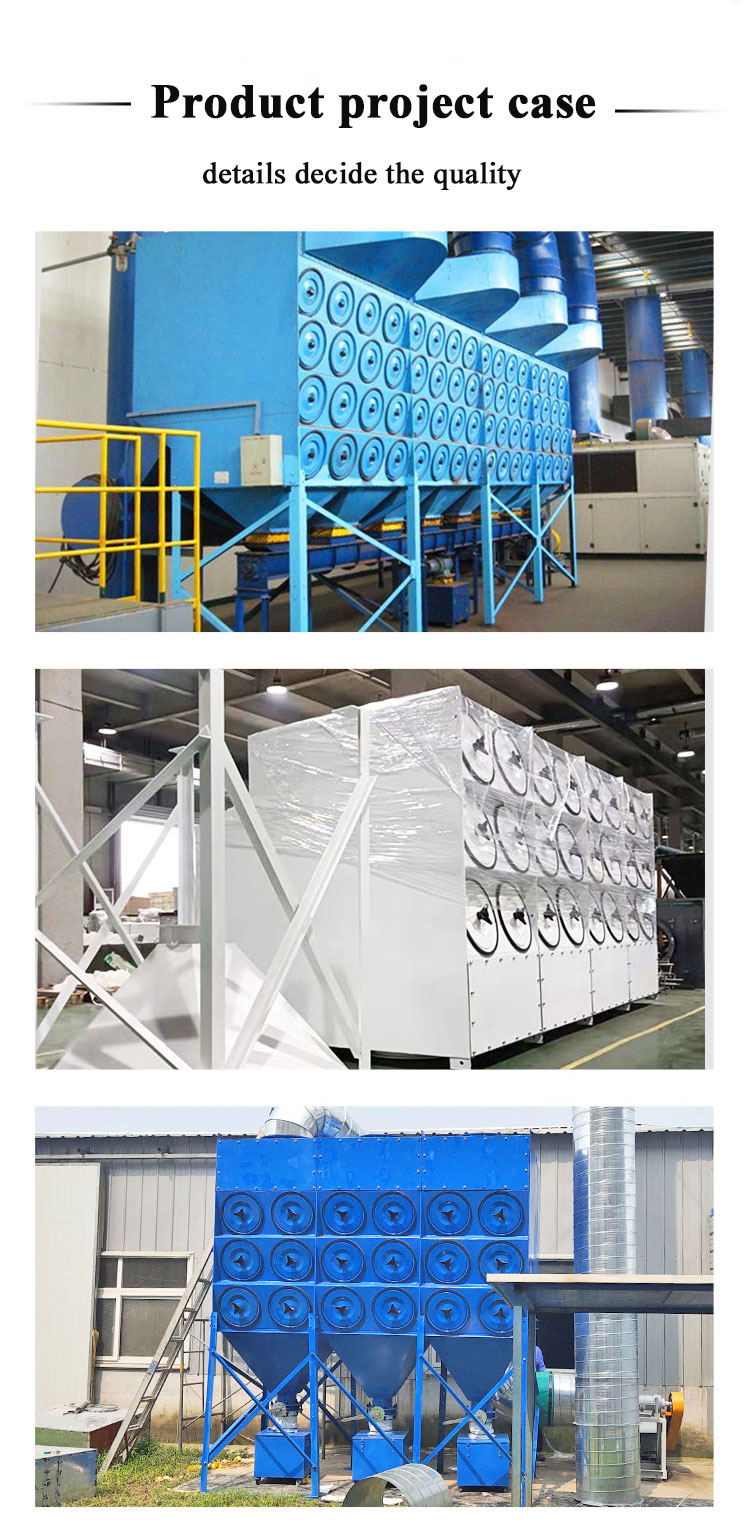
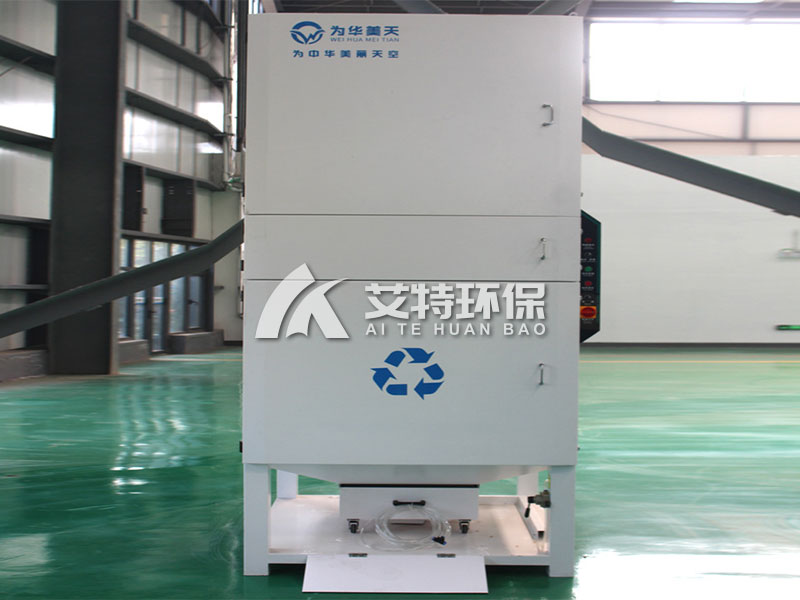
Cartridge dust collector A dust collector composed of a cartridge as a filter element or using a pulse jet
Product Introduction – Next-Generation Cartridge Dust Collector
The cartridge dust collector represents the pinnacle of modern industrial air filtration technology. Defined as a dust collection
system that utilizes cylindrical cartridge filters as the primary filtering element—often in conjunction with a pulse-jet cleaning
mechanism—this equipment is engineered for high-efficiency particulate removal across a wide range of manufacturing,
processing, and material-handling environments. Our newly updated series builds upon decades of field expertise,
incorporating advanced materials, intelligent controls, and modular design principles to deliver superior performance,
lower operating costs, and unprecedented installation flexibility.
Installation Configurations
To accommodate diverse workshop layouts, equipment integration requirements, and maintenance access constraints,
our cartridge dust collectors are available in four distinct mounting styles:
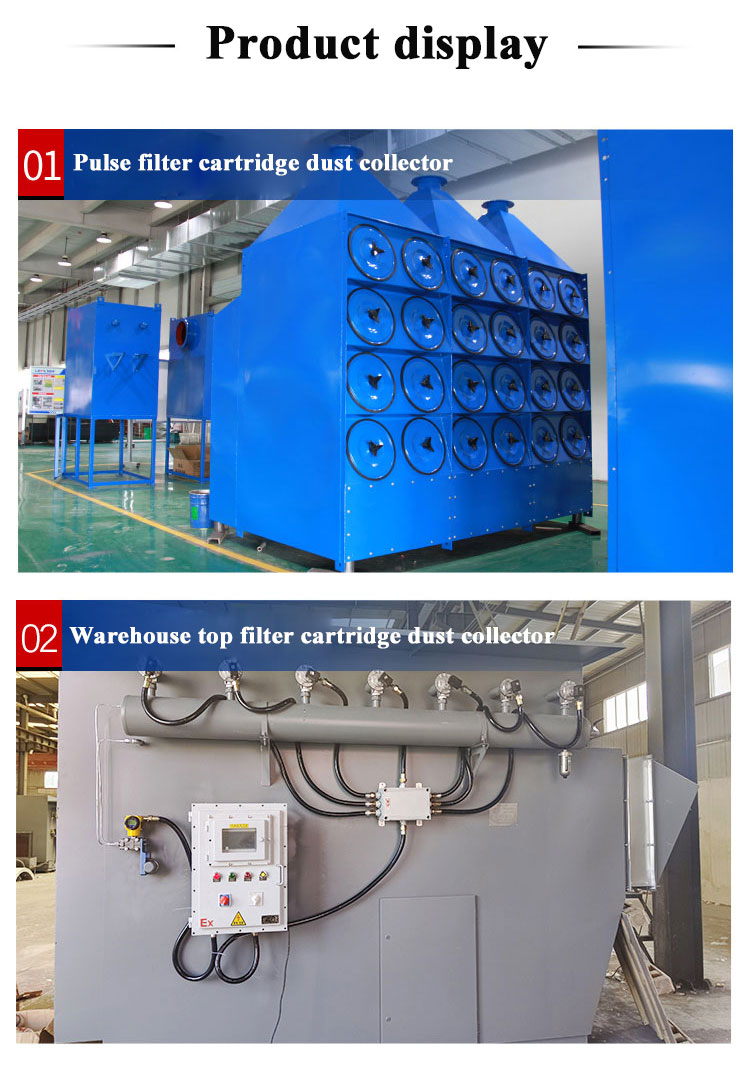
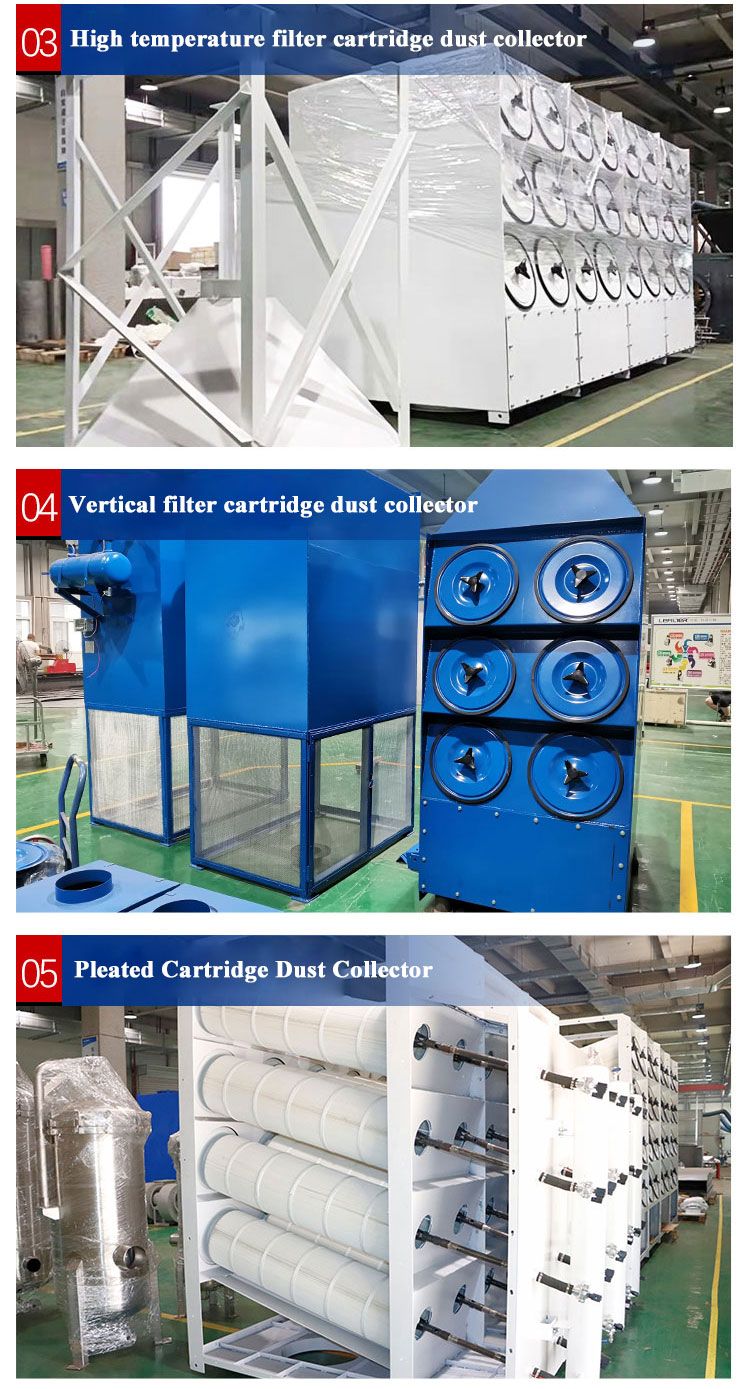
· Inclined Insert Type: Ideal for retrofitting into existing ductwork with limited headroom.
· Side Mount Type: Designed for space-constrained areas where horizontal clearance is at a premium.
· Lifting Type: Allows for easy filter replacement from above, suitable for high-ceiling facilities.
· Top-Mount Type: Facilitates quick access for maintenance without entering the dirty air plenum.
Filter Cartridge Material Options
The performance and longevity of a dust collector are largely determined by the filter media. We offer a comprehensive selection
of cartridge materials, each tailored to specific dust characteristics and regulatory requirements:
· Long-Fiber Polyester Filters: General-purpose, cost-effective solution for common dry dusts.
· Composite Fiber Filters: Enhanced depth-loading capacity for mixed particulate streams.
· Anti-Static Filters: Incorporate conductive fibers to prevent electrostatic discharge risks in explosive atmospheres (e.g., wood,
grain, or chemical dusts).
· Flame-Retardant Filters: Treated with inherent flame-resistant properties for high-temperature or spark-prone applications.
· Coated Filters: Feature a micro-porous surface coating (e.g., PTFE) that releases dust easily, improving cleaning efficiency and
extending cartridge life.
· Nano-Fiber Filters: Utilize an ultra-thin nano-fiber layer on the substrate, achieving HEPA-level filtration efficiency with lower
pressure drop—ideal for sub-micron hazardous particulates.
Technical Parameters (Updated Specifications)
Our new generation dust collectors are available in a wide range of capacities, from 1,000 to over 100,000 m³/h. Key technical
highlights include:
· Filtration velocity: 0.8 – 1.8 m/min (depending on dust type)
· Operating temperature: -20°C to 120°C (higher with optional cooling devices)
· Inlet dust concentration: ≤ 200 g/Nm³
· Emission concentration: consistently ≤ 10 mg/Nm³ (meeting the most stringent international environmental standards)
· Pulse-jet pressure: 0.4 – 0.6 MPa
· Differential pressure control range: 500 – 1500 Pa
Performance Characteristics – What Sets Our New Model Apart
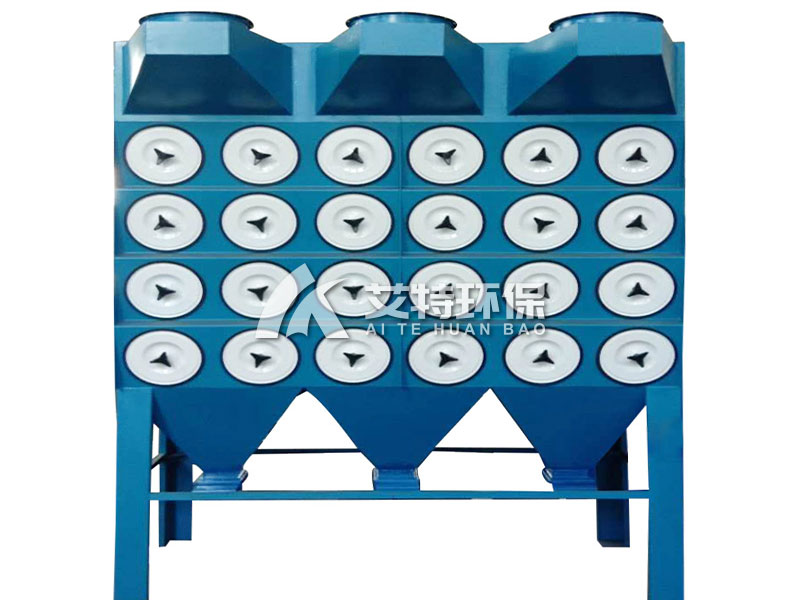
1. Compact Footprint, Maximum Space Utilization: The vertical or horizontal cartridge arrangement minimizes the overall
equipment volume compared to traditional baghouse systems. This compact design saves valuable floor space and allows for
easier integration into crowded production lines.
2. Customizable Dust Discharge Solutions: Depending on the collected material's properties and your process requirements,
we offer multiple discharge options—standard hopper with manual dumping, sealed tote bin, screw conveyor for continuous
removal, or pneumatic conveying integration.
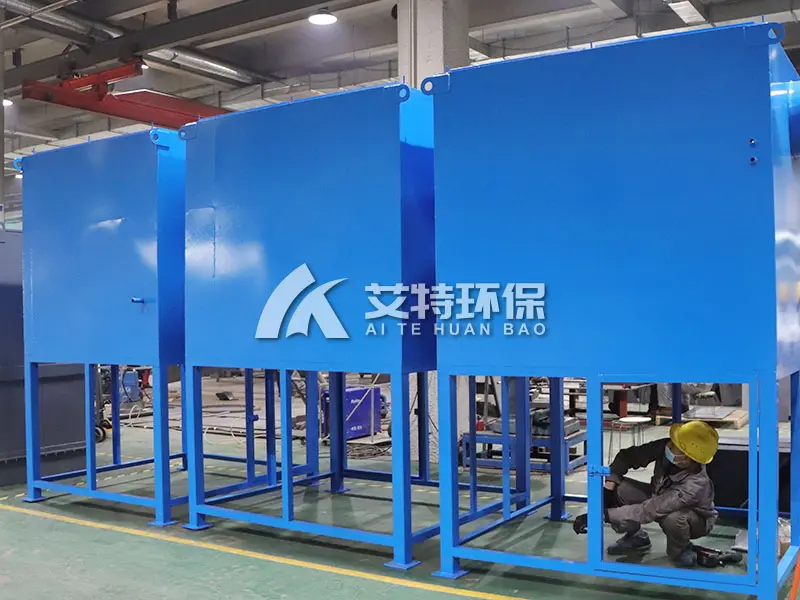
3. Modular Box-Type Construction: Our flexible, modular design enables users to combine multiple units in parallel or series.
This "building-block" approach ensures that even the most challenging site conditions—odd-shaped spaces, height restrictions,
or multi-floor installations—can be accommodated without compromising performance.
4. Intelligent PLC Control with Adaptive Pulse Cleaning: The new system features a premium imported PLC (Programmable Logic
Controller) with a user-friendly HMI touchscreen. The pulse-jet cleaning cycle is fully adjustable (time-based or
pressure-differential triggered). A built-in differential pressure display instrument provides real-time feedback, and the
controller can automatically optimize cleaning intervals, reducing compressed air consumption by up to 30% compared to
fixed-cycle systems.
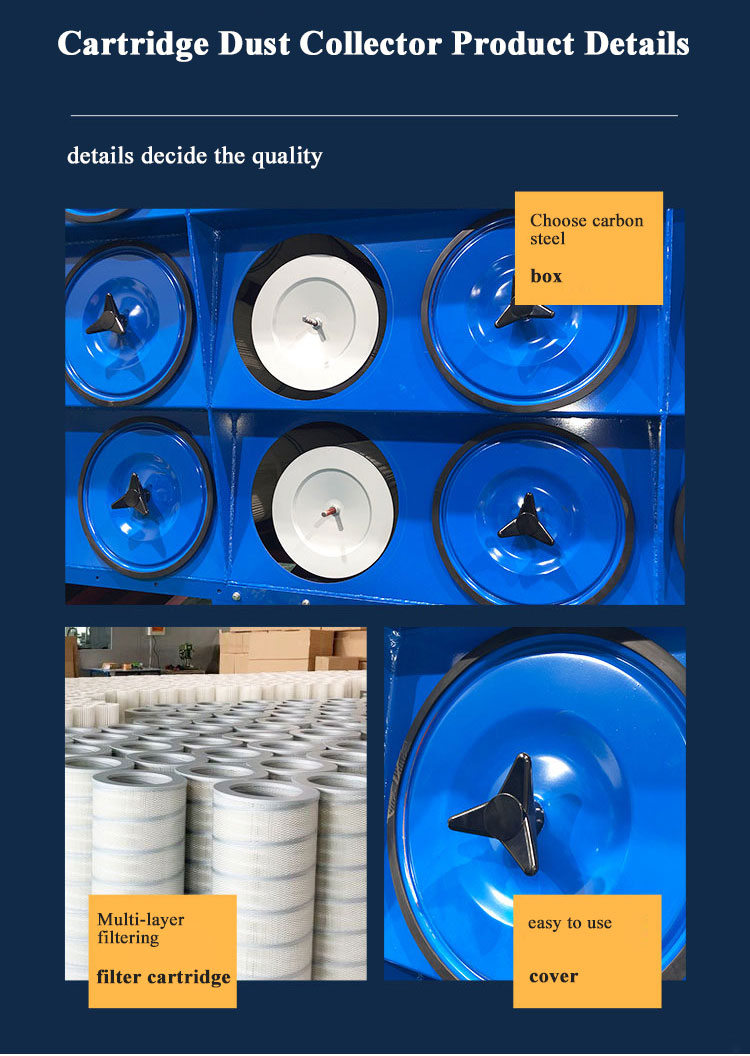
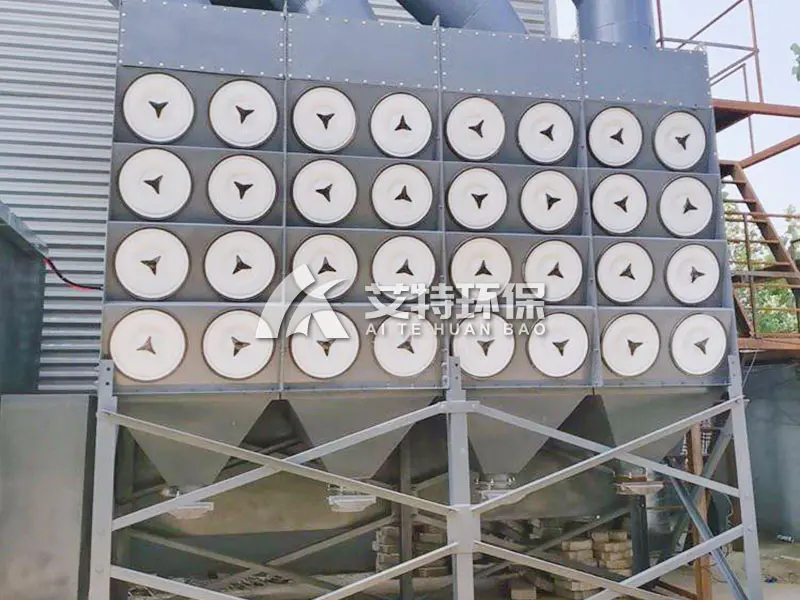
5. Horizontal Cartridge Placement with Individual Access Covers: Each filter cartridge is horizontally oriented, and each housing
section is equipped with its own quick-release access cover. This design allows maintenance personnel to inspect, replace,
or clean individual cartridges without shutting down the entire system—dramatically reducing downtime and labor costs.
6. Superior Purification Efficiency: Our advanced filter media and optimized airflow distribution ensure that the collector
achieves a purification efficiency of over 99.9% for particulate sizes greater than 1 micron. For nano-fiber media, efficiency
exceeds 99.97% at 0.3 microns (comparable to HEPA standards), ensuring your facility meets or exceeds OSHA, EPA, and local
emission limits.
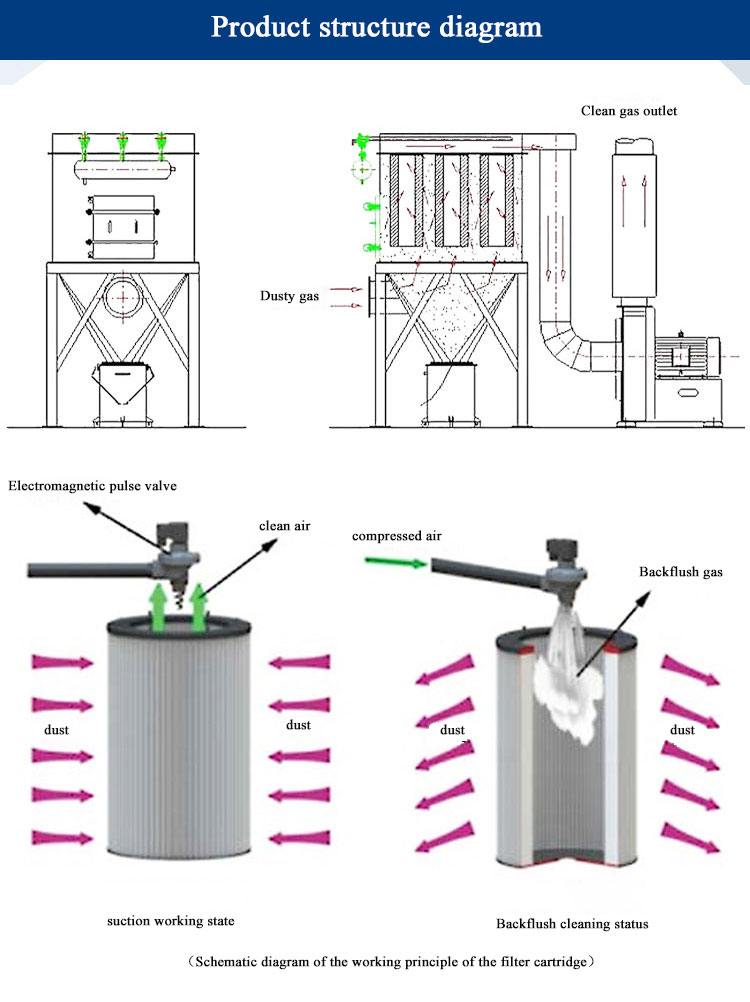
Working Principle – Step-by-Step Filtration Process
The operational cycle of our cartridge dust collector is engineered for continuous, reliable performance:
Step 1 – Inlet and Pre-Separation: Dust-laden gas enters the collector through a tangential or straight inlet into a settling chamber.
Due to a sudden expansion in the cross-sectional area, the airflow velocity drops sharply. Coarse and heavy particles
(typically >50 microns) lose momentum and fall directly into the ash hopper under the combined forces of gravity and inertial
impaction. This pre-separation step reduces the dust load on the cartridges by 20–40%, extending their service life.
Step 2 – Filtration Through the Cartridge: The remaining fine dust particles—characterized by small size and low density—are
carried upward into the filter chamber. As the air passes through the pleated cartridge media, particles are captured on the
outer surface through a synergistic mechanism involving Brownian diffusion (for sub-micron particles), direct interception,
and inertial collision. The purified (clean) air then passes through the cartridge walls, enters the clean-air plenum, and is
exhausted to the atmosphere via an induced-draft fan and stack.
Step 3 – Pulse-Jet Cleaning (Regeneration): Over time, dust accumulation on the cartridge surface increases the pressure drop.
To maintain optimal performance, a pulse-jet cleaning system is activated. A brief, high-pressure burst of compressed air
(0.5–0.6 MPa) is released through a solenoid valve into a blowpipe aligned with the cartridge center. This jet induces a secondary
airflow (5–7 times the primary volume), creating a powerful shockwave that travels down the length of the cartridge.
The resulting vibration and reverse airflow violently shake loose the collected dust cake, which then falls by gravity into the ash
hopper below.
Step 4 – Automated Continuous Operation: To ensure uninterrupted filtration, the pulse control system sequences the cleaning
of individual rows of cartridges in a programmed cycle (e.g., sequential or on-demand cleaning based on differential pressure).
This allows the collector to operate 24/7 without manual intervention.
FAQ – Frequently Asked Questions
Q1: How often do the filter cartridges need to be replaced?
A: Cartridge lifespan depends on the dust type, inlet concentration, and operating hours. Under typical conditions (e.g., wood
dust or general industrial dust), our long-polyester and nano-coated cartridges last 12–24 months. For abrasive or adhesive dusts,
lifespan may be 6–12 months. We recommend regular differential pressure monitoring—when cleaning cycles become shorter
and pressure drop remains high, it's time for replacement.
Q2: Can the system handle high-temperature or moist air streams?
A: Yes, with the appropriate media selection. Our standard polyester cartridges handle up to 120°C. For higher temperatures
(up to 200°C), we offer aramid or fiberglass-based cartridges. For moisture-laden air (e.g., from drying processes), we recommend
PTFE-coated or hydrophobic media to prevent dust caking and hydrolysis. Additionally, we can supply insulated hoppers and
trace-heating options to prevent condensation.
Q3: What is the difference between time-based cleaning and differential pressure-based cleaning?
A: Time-based cleaning pulses the cartridges at fixed intervals regardless of dust load—simple but wastes compressed air.
Differential pressure-based cleaning only activates when the pressure drop reaches a set point (e.g., 1200 Pa), ensuring cleaning
occurs only when needed. Our new PLC system supports both modes and can be programmed with hybrid logic for maximum
efficiency and media life.
Q4: How do I choose the right filter cartridge material for my application?
A: The selection criteria include: (a) dust chemical composition and abrasiveness, (b) particle size distribution, (c) operating
temperature and humidity, (d) regulatory emission limits, and (e) explosion risk. We provide a free consultation service—please
send us a dust sample or your process data sheet, and our applications engineers will recommend the optimal media with
performance guarantees.
Q5: Can the dust collector be expanded later if my production increases?
A: Absolutely. Our modular "building-block" design allows you to add additional housing modules, fan capacity, and controls
in parallel. We can design the initial system with spare space for future modules, making capacity expansion simple and
cost-effective.
Q6: What safety features are included for combustible dust?
A: For applications involving combustible dusts (e.g., aluminum, magnesium, grain, coal), we offer explosion-relief panels,
flameless venting systems, isolation valves, temperature sensors, spark detection, and inert gas purging. All components comply
with ATEX or NFPA standards. Anti-static and flame-retardant cartridge options are mandatory for such installations.
Q7: How much compressed air does the pulse-jet system consume?
A: Consumption depends on the number of cartridges and cleaning frequency. On average, each pulse uses 10–15 liters of
compressed air at 0.5 MPa. With our adaptive PLC control, typical consumption is 0.5–2.0 m³/min for a medium-sized system
(e.g., 100 cartridges). We also offer low-pressure, high-volume cleaning alternatives to reduce air demand.
Q8: What is the warranty and after-sales support?
A: We provide a 24-month warranty on structural components and a 12-month warranty on filter cartridges (for normal use).
Our global service network offers on-site installation supervision, commissioning, operator training, and preventive
maintenance programs. Spare parts are available for same-day or next-day shipping from regional warehouses.
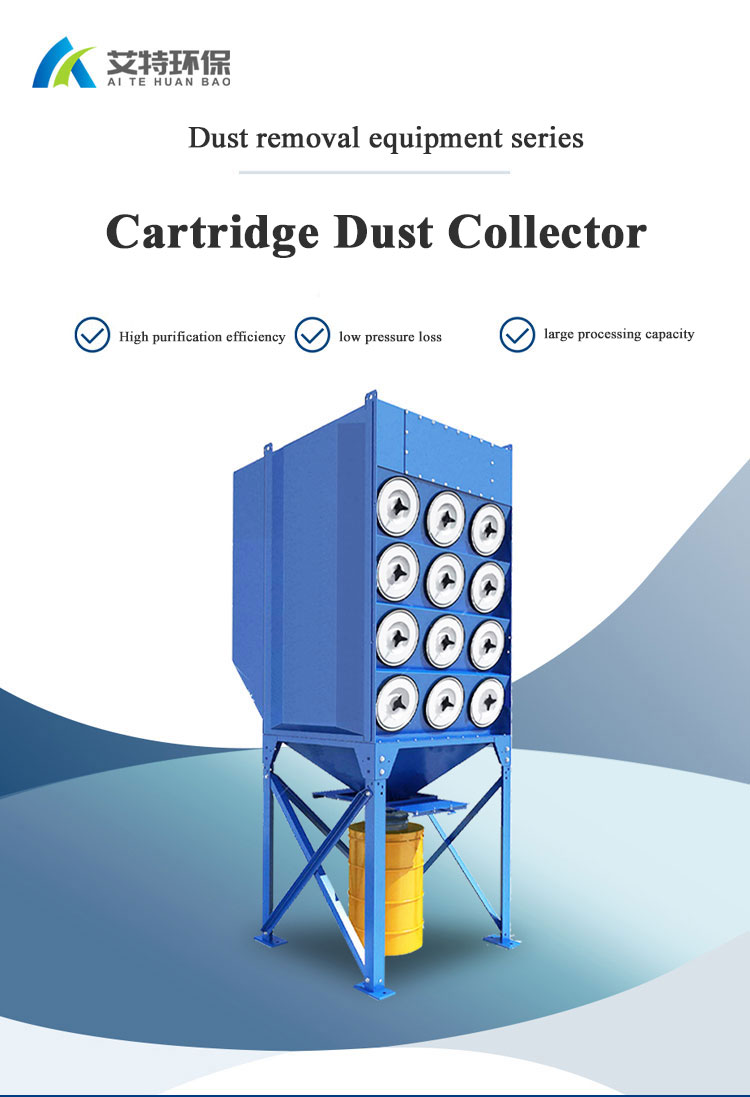
Pulsed reverse blow filter cartridge dust collector
Similar ProductsVIEW MORE >
WhatsApp / Wechat: +8613273719759
Factory Address: Zhengshang Navigation Square, South Hanghai Road, Erqi District, Zhengzhou City, Henan Province P.R.China.


 Export01@aiteeps.com
 ++8613273719759
